Why the Cessna 172 Became Aviation’s Default Trainer
The Airplane Almost Every Pilot Knows
I'm sure you've seen one recently. You can hardly go to an airport without seeing one sitting somewhere on the ramp.
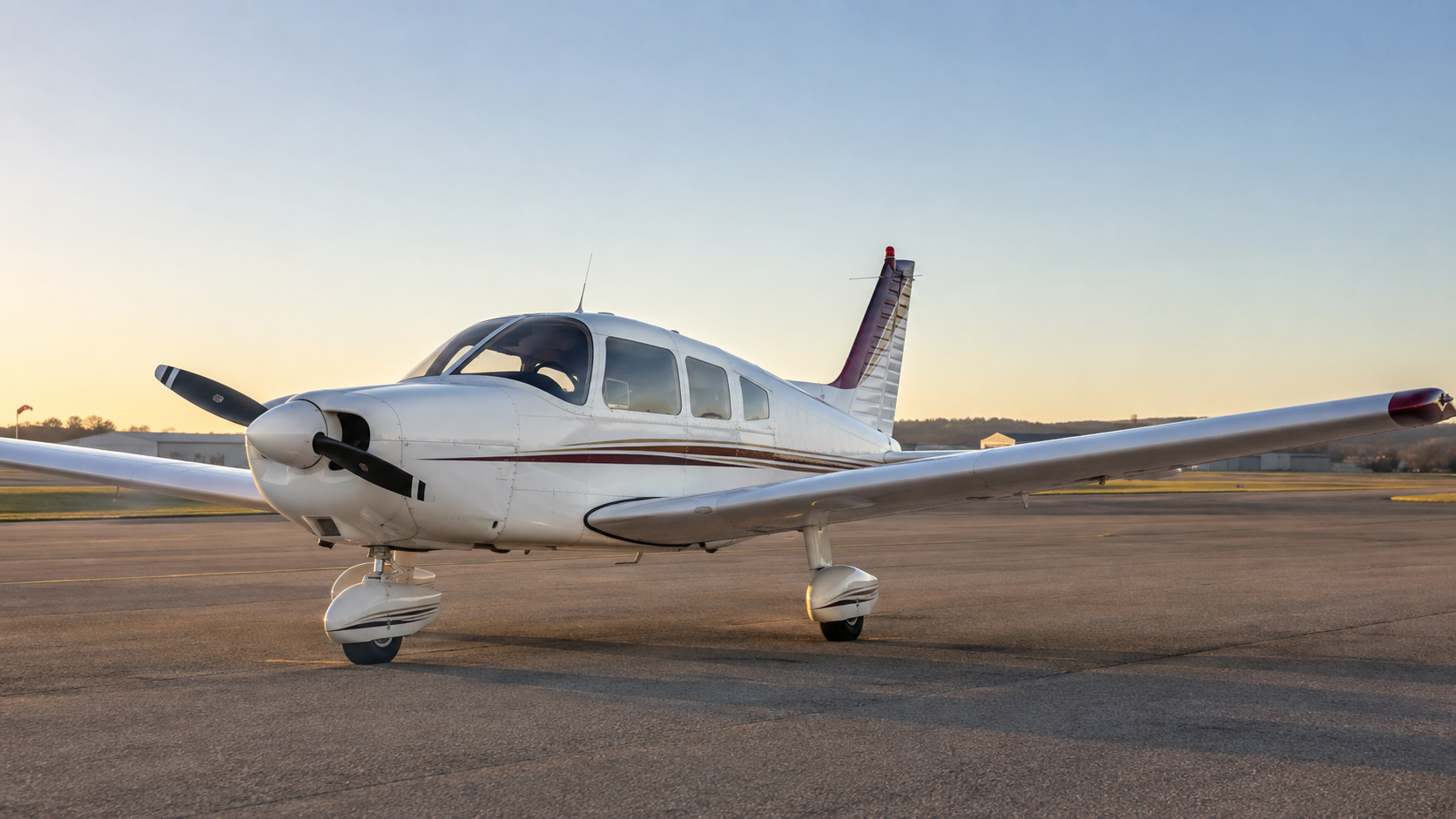
The Cessna 172 Skyhawk is an iconic airplane that has shaped general aviation through decades of manufacturing, flight training, personal ownership, and working aviation. More than 45,000 have been delivered since the first 172 flew in 1955, and remarkably, new ones are still being built today.
The Skyhawk began as an evolution of the Cessna 170. One of the biggest changes was replacing the 170's conventional landing gear with tricycle landing gear, improving ground handling and making the airplane more approachable to a new generation of pilots.
Look at one of the earliest straight-tail 172s and then look at a brand-new Skyhawk. More than 70 years separate them, yet the family resemblance is unmistakable.
That might be one of the secrets to the airplane's success.
Cessna found a basic formula that worked remarkably well—and then spent decades refining it.
Simple Enough to Learn In
One of the Skyhawk's greatest strengths as a trainer is its simplicity.
In a typical 172, there really isn't that much for a new student to manage: a throttle, a mixture control, a fixed-pitch propeller, fixed landing gear, conventional rudder pedals and a standard control yoke.
That simplicity matters when you're learning to fly.
A beginning student already has plenty to think about. Maintaining altitude, watching airspeed, coordinating turns, communicating on the radio, looking for traffic, navigating and figuring out where the airport went can consume an incredible amount of mental bandwidth.
The airplane doesn't need to make the process more complicated.
Instead, the student and instructor can use the Skyhawk as a classroom and concentrate on learning how to fly.
It helps that the airplane itself is generally docile and predictable.
Take stalls, for example. With proper training and coordination, the Skyhawk provides an excellent platform for learning what an approaching stall feels like and how the airplane responds. One particularly interesting exercise is the falling-leaf stall, where the airplane is held in a stalled condition while the pilot uses the rudder to manage the tendency for a wing to drop.
If you've never experienced one, it can be a fantastic lesson in rudder control and aircraft handling—but it's something I'd recommend exploring with a qualified instructor rather than trying for the first time on your own.
It's a Great Airplane to Teach In, Too
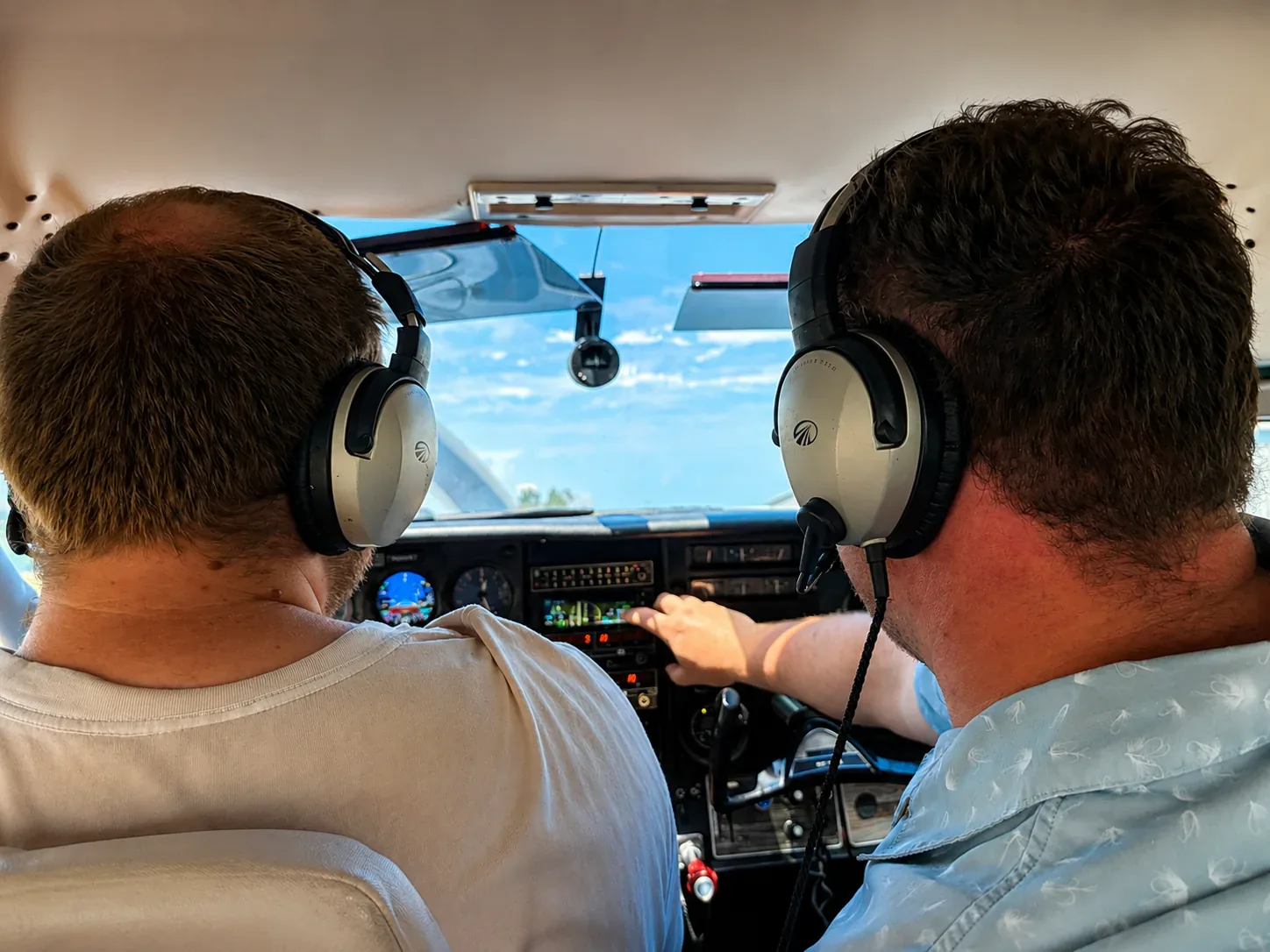
The Skyhawk isn't only friendly to the student. After spending many hours instructing in them, I've come to appreciate how well the airplane works from the other seat.
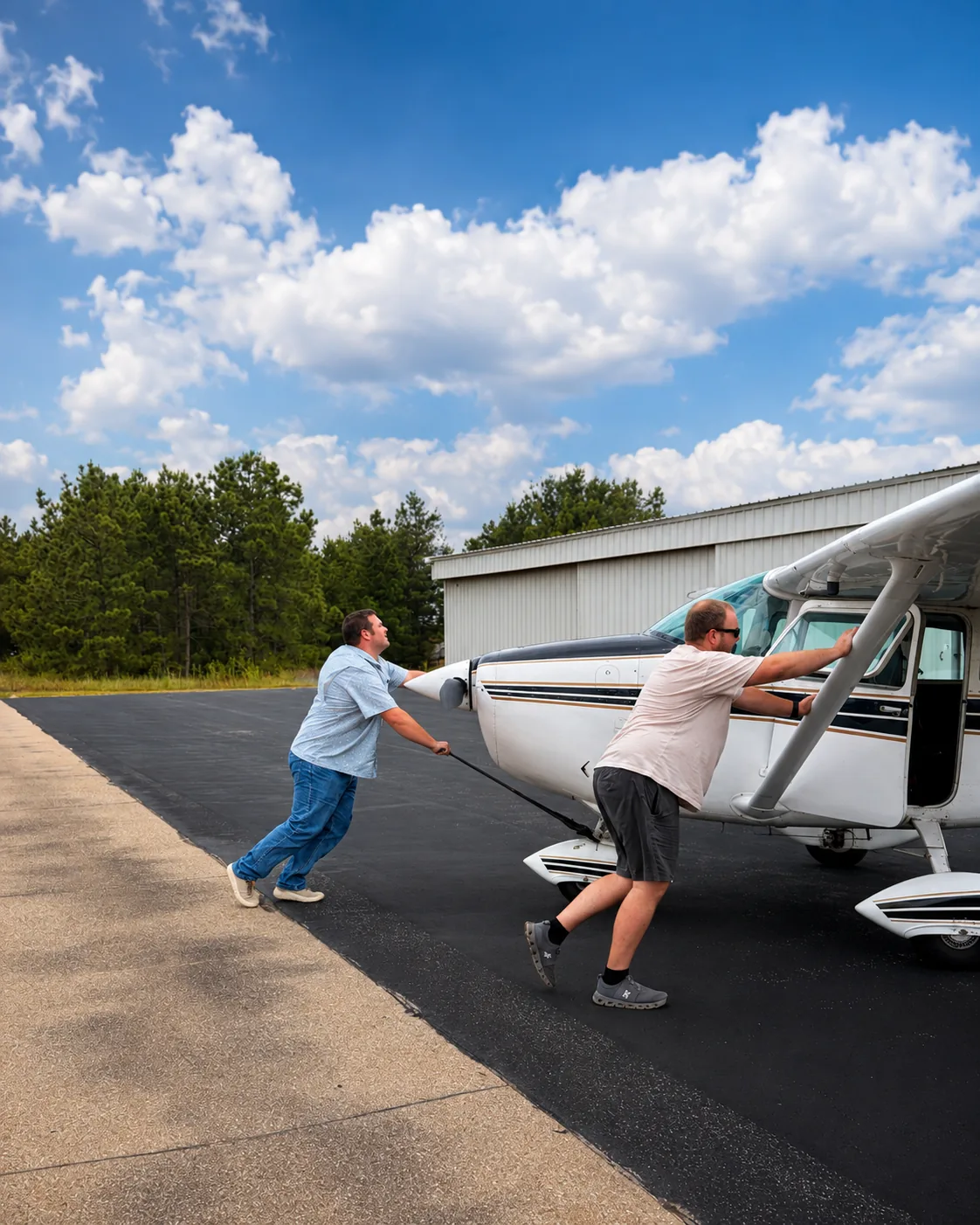
Something as simple as having two doors makes a difference.
During ground instruction, an instructor can stand at one door while the student stands at the other, both looking into the cockpit while discussing the instruments, controls, checklists or systems they'll be using during the lesson.
Then there is the back seat.
That makes it possible to bring another student along to observe a lesson when appropriate, and after earning a certificate it gives a new pilot room to bring friends or family along and actually use the airplane.
The fixed landing gear is simple and robust, and the airplane is remarkably tolerant of the occasional less-than-perfect arrival—whether it comes from a student learning to land or an instructor demonstrating how it's done just a little too confidently.
Not that an instructor would ever do such a thing.
A Trainer You Don't Immediately Outgrow
Many pilots earn their certificates in a Skyhawk and then simply keep flying them.
That's important.
Some airplanes make excellent trainers but aren't necessarily airplanes a pilot dreams about flying after training is over. The 172 crosses that line unusually well.
A new pilot can learn the fundamentals in one, take a checkride in one, and then continue using the same basic airplane for cross-country trips, instrument training, recreational flying and building experience.
Some eventually decide to own one.
Even experienced professional pilots often come back to airplanes like the 172 when they want to fly recreationally. There is something refreshing about a simple piston airplane after spending your working life around much more complicated machines.
The Skyhawk may be a trainer, but it isn't only a trainer.
One Airframe, a Surprising Number of Variations
We're all familiar with the basic 172, but over the decades Cessna has put some interesting spins on the formula.
I've personally flown several different versions.
There are the familiar Skyhawks most pilots recognize, but I've also flown the Hawk XP, which paired the familiar airframe with a more powerful 195-horsepower Continental engine and a constant-speed propeller.
Then there was the diesel-powered Skyhawk I flew, which burned Jet A instead of avgas.
Cessna even produced the 172RG Cutlass, which added retractable landing gear and a constant-speed propeller to the 172 family.
Even among more conventional Skyhawks, decades of production have brought different engines, horsepower ratings, fuel systems and avionics. You can find everything from older airplanes with traditional round gauges to modern Skyhawks equipped with integrated glass cockpits.
Yet underneath all those variations, the airplane remains remarkably familiar.
Once you're comfortable in one 172, transitioning to another version is often more a matter of learning that particular airplane's systems, equipment, limitations and procedures than learning an entirely unfamiliar airplane.
More Than a Training Airplane
Perhaps my favorite example of the Skyhawk's versatility comes from flying them for work.
I spent several years flying aerial and pipeline survey in Cessna 172s.
Survey flying requires precision. We needed to keep the airplane's pitch and roll within only a few degrees of level while holding our survey line within roughly 100 feet of centerline.
The Skyhawk's stability made it exceptionally well suited to that kind of work.
Some of the airplanes I flew had extended-range fuel systems that allowed us to remain on station for as long as eight hours. During hot summer days, being able to open the windows and get some airflow through the cabin was a surprisingly valuable feature.
Think about the range of jobs we're asking from essentially the same airplane.
One Skyhawk might spend the morning teaching a student how to land.
Another might carry a family on a weekend trip.
Another might be flying an instrument-training mission.
And another can spend hours methodically following a pipeline or survey line across the country.
That's an impressive career for an airplane most people simply think of as a trainer.
Seventy Years Later, We're Still Using Them
Perhaps the strongest argument for the Skyhawk isn't what it did historically.
It's that we're still choosing it.
The first Cessna 172 flew in 1955. More than 70 years later, Cessna is still building Skyhawks, and flight-training organizations are still buying factory-new ones.
The technology has certainly changed.
Modern Skyhawks can have glass cockpits and avionics that would have been unimaginable to the pilots flying the earliest straight-tail 172s. Engines, interiors, electrical systems and equipment have evolved along the way.
But put an early 172 next to a modern Skyhawk and the basic idea is still immediately recognizable.
Four seats.
A high wing.
Fixed tricycle landing gear.
Simple controls.
Predictable handling.
A useful airplane that doesn't ask its pilot to manage unnecessary complexity.
Apparently, Cessna got quite a lot right the first time.
So Why Did the Skyhawk Win?
There are airplanes that are faster than a 172.
There are airplanes that carry more.
There are airplanes that are more efficient, more comfortable, more technologically advanced or simply more exciting.
There are even other airplanes that make excellent trainers.
The Skyhawk doesn't dominate because it does any one thing better than every other airplane.
It dominates because it does almost everything pretty well.
It's simple enough for someone taking their first flight lesson, but capable enough that they don't immediately outgrow it.
It's docile enough to teach in, yet useful enough to own.
It's stable enough for a student learning to hold altitude and, in my experience, stable enough to spend hours flying precise aerial-survey lines.
It's simple, robust, familiar and extraordinarily versatile.
And that's exactly what you want when you're learning to fly.
More than 45,000 airplanes and 70 years later, pilots are still climbing into Skyhawks to learn the same fundamentals of flight.
I suspect they will be for a long time to come.